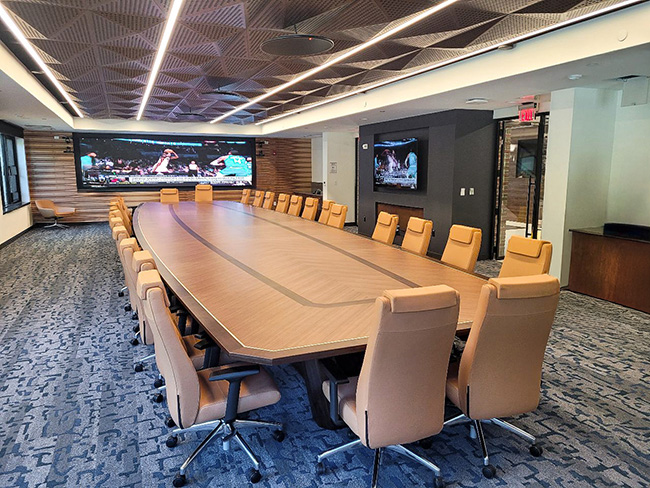
The conference table is often the focal point of the room and its design must also accommodate seating, multi-use options, room flow, technology needs and overall aesthetics. Understanding how these functional requirements influence custom table pricing early in the planning process helps establish realistic budgets, evaluate design options, and manage overall project costs.
At Paul Downs, we make a huge range of custom conference tables. They come in different sizes, shapes, and materials, incorporate a variety of technology, and are designed to meet a range of budgets.
Understanding Custom Conference Table Pricing
Three factors have the biggest impact on price:
SIZE: How large does the table need to be, and how many people do you need to seat comfortably? Room dimensions, circulation requirements, and seating arrangements should be considered together.
COMPLEXITY: Shape, engineering, integrated AV, power and data, wire management, and reconfigurable components can all affect cost.
MATERIALS: Wood veneer, solid wood, laminate, specialty surfaces, metal, leather, and other inlays provide options at different price points that complement surrounding architectural finishes and furnishings.
To make custom pricing easier to understand, we’ve grouped our work into three ranges: Standard, Premium, and Ultra.
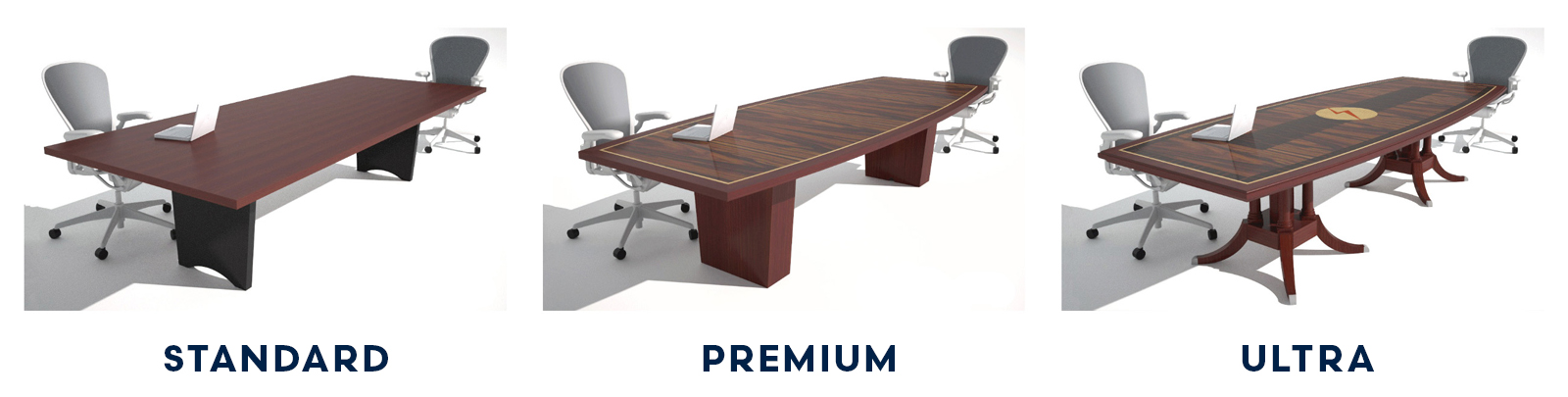
STANDARD
Standard tables provide the benefits of custom sizing and design with relatively straightforward materials and construction. They are a good option when getting the size, seating, shape, and functionality right is more important than adding elaborate details.
Boat-shaped and rectangular tables in this grade run from $650 to $1,200 per foot in length. For instance, a 10-foot-long table in a common width (54 to 60 inches) will cost a minimum of $6,500.
PREMIUM
Premium tables combine a higher level of materials, craftsmanship, design complexity, and technology. This is where many executive boardrooms, committee tables, branded tables, and AV-integrated solutions fall.
We think of this range as a combination of good looks and superb functionality at a reasonable price. Tables in this range run from $1,200 to $2,400 per foot in length.
ULTRA
Ultra tables represent our most complex projects, incorporating exceptional materials, sophisticated engineering, advanced technology, distinctive shapes, or highly customized design details.
These projects often involve particularly demanding design requirements or distinctive architectural features. Pricing starts at $2,400 per foot.
Additional Pricing Considerations
- Odd-shaped tables: How long is a V-shaped, open square, or U-shaped table? Unfold the shape into a straight line. For instance, a U-shaped table with 20-foot-long arms and a 10-foot base is 50 feet long.
- Round and square tables: These shapes don’t fit neatly into our dollar-per-foot formulas. Contact us with a target budget, and we’ll help determine the options. Our round and square size and seating guide can also help establish appropriate dimensions and seating capacity.
- Multiple tables: Ordering multiple copies of a single table can save money because engineering costs can be spread across the project. This can be especially beneficial for modular table systems.
These pricing ranges provide useful starting points, with flexibility to tailor materials, design, and functionality to meet project needs while maintaining aesthetics and keeping costs within budget. Each table is designed for its specific requirements and built by our craftsmen to the same high standards of quality, utility, and durability.
We work with architects, designers, and clients to evaluate materials, construction methods, and technical requirements, identifying opportunities for budgeting and value engineering that align the design with the available budget without compromising its essential functions.
Balancing Custom Conference Table Cost and Long-Term Value
For architects and designers, the cost of a conference table should be evaluated within the context of the entire room. While off-the-shelf options from standard furniture manufacturers may have a lower initial price, they can introduce compromises that ultimately impact the end users. Custom solutions give design teams the opportunity to present clients with distinctive, tailored options that elevate the overall design, meet functional requirements, and create a more memorable space—all while working within the project budget.
By working directly with clients and their design teams, we can incorporate important project information into the custom solution.
Our experience across a wide variety of projects helps us identify practical approaches to challenging requirements, often before those requirements become costly problems.
When Custom Design Solves Complex Meeting Room Requirements
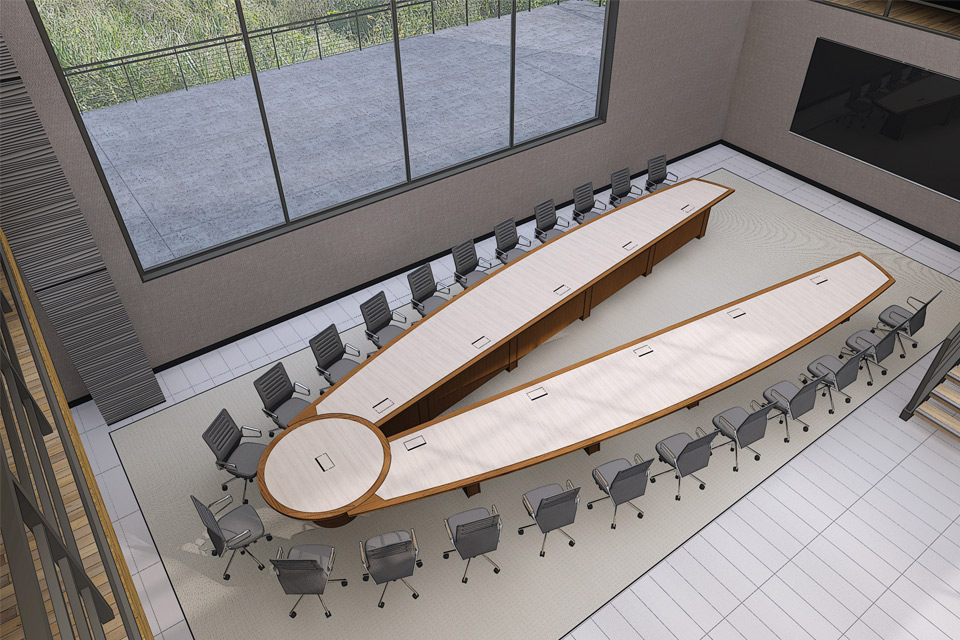
Some conference rooms present challenges that standard furniture simply wasn’t designed to address. Unusual dimensions, large seating capacities, demanding AV systems, accessibility requirements, or distinctive architectural features may call for a more specialized solution.
The right table design begins with understanding how people will use the space. Will everyone have a clear view of a presentation screen? Is there enough workspace for laptops and documents? Can power and data be integrated without visible wiring? Does the table complement the surrounding architecture while maintaining comfortable circulation?
Successful technology integration requires coordinating the table design with the room’s AV systems and the needs of its users.
We specialize in unusual table types:
Committee tables are frequently used by governmental organizations, including school boards, town councils, tribal governments, and military units. These projects require careful coordination of seating capacity, sightlines, microphones, monitors, power and data, accessibility, and circulation.
U-shaped conference tables support participant interaction while creating a natural focal point for presentations and videoconferencing. These configurations are often used in military and other facilities with large wall-mounted video displays.
Scissoring conference tables transition between face-to-face meetings and videoconferencing while maintaining integrated power, data, and AV connectivity. Our designs allow the table to move from one configuration to another in minutes.
Reconfigurable tables allow rooms to accommodate different functions through modular furniture arrangements. Many of our reconfigurable tables are designed to offer greater refinement and architectural integration than conventional training tables.
For architects and designers, these are more than furniture choices. They are opportunities to solve spatial, technical, and operational challenges through custom design.
Designing Flexible and Reconfigurable Meeting Spaces
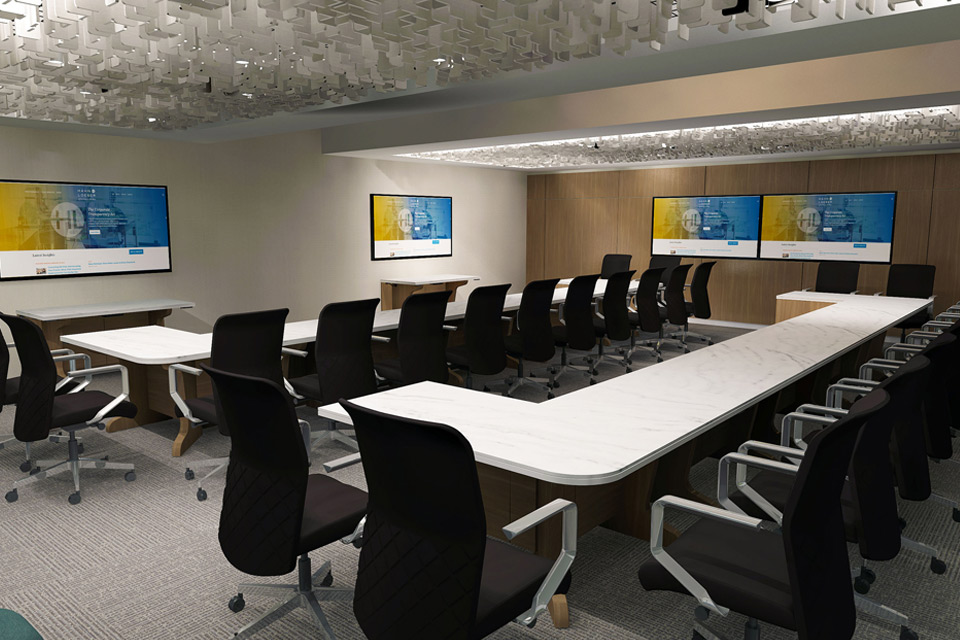
Flexibility is increasingly important in spaces expected to support multiple types of meetings and activities. Custom reconfigurable and modular tables can help a single room serve several functions without sacrificing the appearance of a finished conference environment.
Individual tables can be used for training or classroom-style seating, separated for smaller collaborative groups, or brought together to create a large conference table.
Folding tops, casters, integrated power and data, and dimensions designed specifically for the room can make those transitions easier.
A large meeting in the morning, employee training in the afternoon, and smaller team sessions the next day can all happen in the same room.
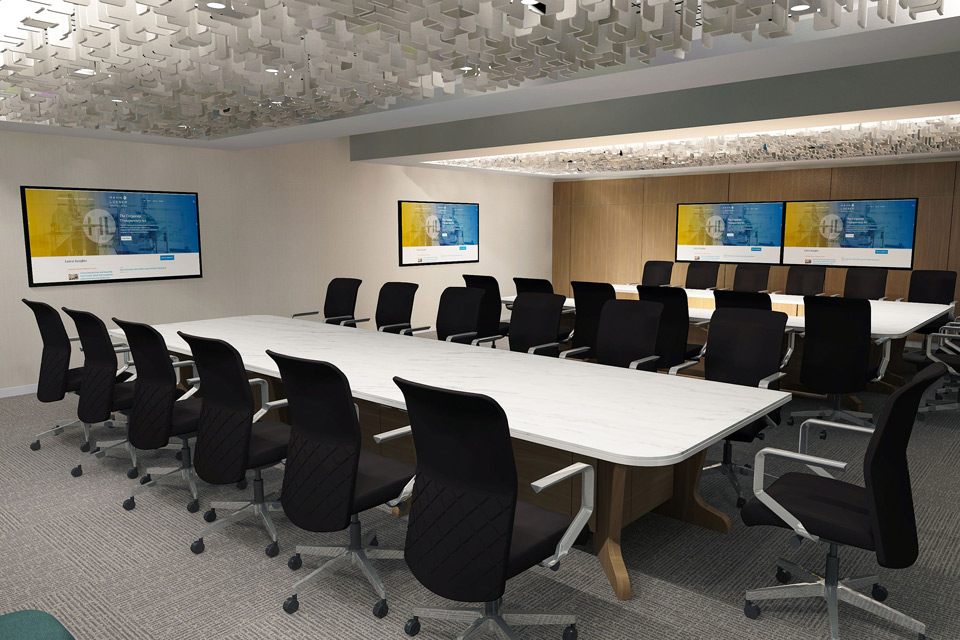
By considering these requirements during the design phase, architects and designers can help clients get greater functionality and long-term value from their meeting spaces.
Integrating Branding Into Conference Table Design
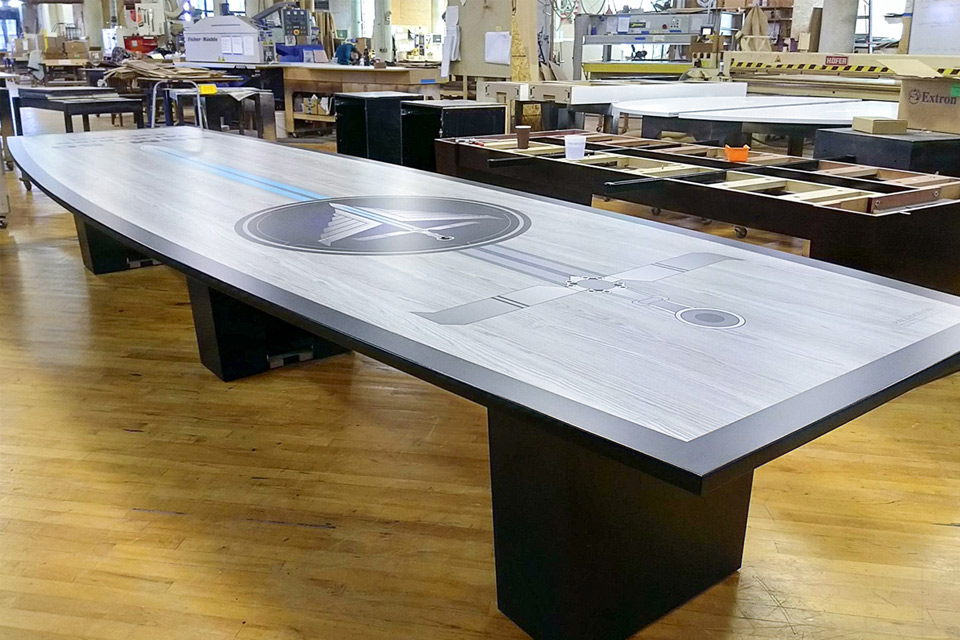
A custom conference table can also contribute to the visual identity of a space, reinforcing the overall design concept and the organization’s brand.
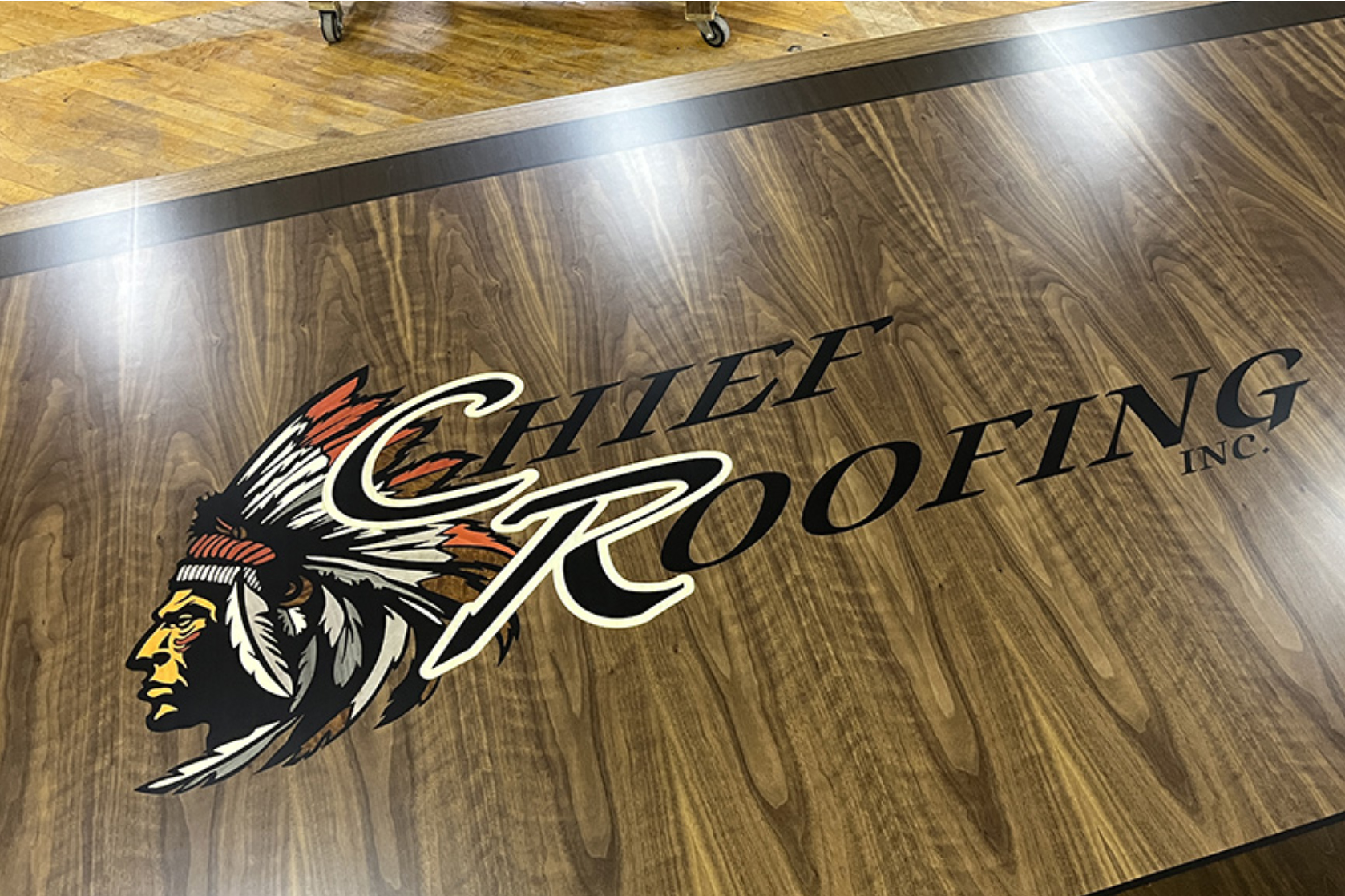
A beautifully integrated logo can make a strong impression on clients and visitors, reinforce identity and pride among employees, and enhance the overall profile of an executive boardroom, corporate headquarters, government facility, university, or other prominent space.
A company logo, organizational seal, emblem, or other graphic can be incorporated directly into the tabletop using wood, metal, or other inlay techniques.
When considered early in the design process, branding can become an integral architectural detail rather than an element added after the table is complete.
Planning and Budgeting for a Custom Conference Table
You don’t need a fully developed table design before contacting Paul Downs. In fact, involving our team early can help identify options that may influence the room layout, material specifications, technology coordination, and overall budget.
Architectural drawings, room dimensions, preliminary layouts, renderings, seating requirements, and AV specifications are all useful starting points.
We can work with your project team to evaluate table shapes, construction methods, finishes, technology integration, and other requirements while explaining how those decisions affect cost.
Our designers may also identify opportunities to use the space more effectively or develop solutions that weren’t considered in the initial concept.
The goal is to establish a practical direction that supports the design intent and gives the project team a clearer understanding of the investment.
Start With What the Room Needs to Accomplish
Before focusing only on “How much will the custom conference table cost?”, consider a broader question:
“What does this room need to accomplish?”
Does the space need to accommodate a large number of people? Support videoconferencing and presentations? Provide individual access to power and data? Transition between different meeting configurations? Make a memorable impression on visitors or reinforce the organization’s identity?
These decisions are interconnected. Addressing them early helps ensure that the finished table works with the architecture, technology, and people it was designed to serve.
Planning a Custom Conference Room?
Whether you’re developing an initial concept, preparing specifications, or working within an established budget, Paul Downs can collaborate with your project team to explore custom conference table solutions that balance design, functionality, and cost.
Let’s discuss your project. Call 610-549-4692 to start the conversation.


